



Lighting Perspectives
Has lighting design changed? The science of light remains the same. The fundamental reasons why we use light (and why we engage a lighting designer) are unchanged: aesthetics, functionality, emotion and experience.
But over the past 15 years our profession has embraced new technology, gained new knowledge and taken on greater responsibility. The mainstream adoption of LED technology transformed what was possible, while growing awareness of wellbeing, biodiversity and sustainability has reframed how all that creative potential should be applied.
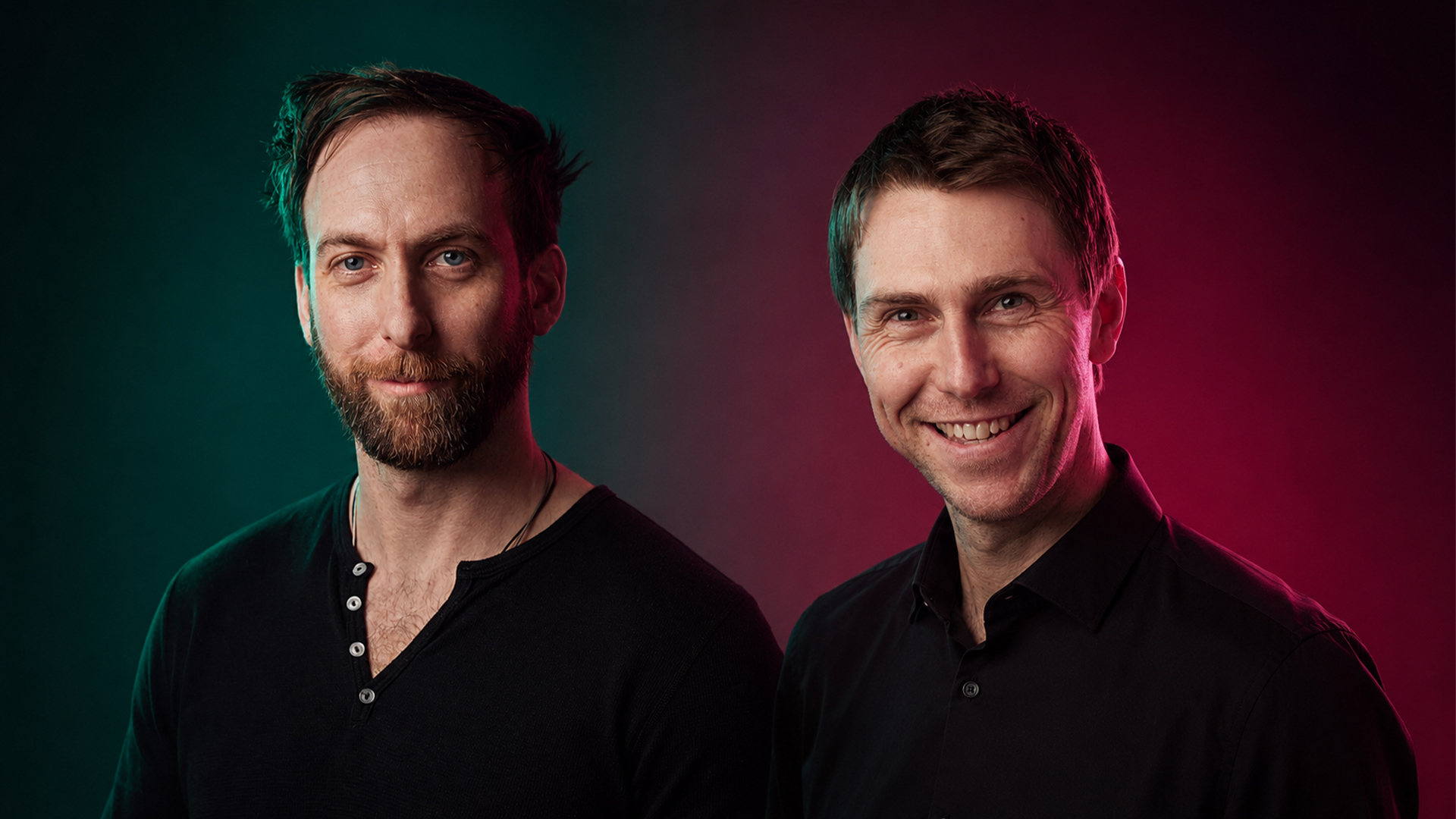
As Nulty marks a decade and a half of designing with light, we asked our Creative Director, Dan Blaker, and Director of Education, Gary Thornton, to reflect on some of the industry’s biggest developments, asking whether they have fundamentally changed lighting design, or simply reinforced the core principles that have always underpinned our profession.
Creative possibilities: the LED revolution.
The widespread adoption of LED in the early 2010s was a gamechanger for the lighting designer’s toolkit. Miniaturisation led to a new wave of creativity. Advances in technology gave us better levels of control and flexibility. While designers have been empowered by LED, it does raise the important question: is it now all too easy to use more light?
Gary: “In the days of cold cathodes or halogen, designers were restricted. You didn’t light every shelf in a piece of joinery because the fitting was too big. Now we have LEDs, there are many ways to integrate a light source. In some cases, designers are just doing it because they can. That said, I like to think we’re coming over that hump and questioning whether we should design in this way, as we become more strategic about energy use.”
Dan: “With the arrival of LED, we were all blinkered by progress. LED promised better efficiency and gave us more design freedom through miniaturisation. But just because you can put a light in a step or a skirting board, doesn’t always mean you should. Broadly speaking, it’s about understanding the harmonics of a space, and using layers of light to make sure that space is conducive to the experience or task.”
Designing for experience: the cultural importance of light.
While the purpose of lighting has always been to make spaces safe, welcoming and functional, society’s relationship with light has changed. The evolution of lighting design in the 21st century has been influenced by the move to a 24-hour society and, to some extent, the commercialisation of light due to the rise in experiential design and social media.
Gary: “Cities are now always on. The sectors we work across are more multifaceted because people demand immersive experiences and instant gratification. We can socialise in the public realm at any time of the day, and work around the clock if we wish. Light facilitates all these things.”
Dan: “Light has always been central to advertising, tourism and placemaking. It also makes spaces more convivial, accessible and sociable. Our industry has come into sharper focus as a result, because the wider world has learnt the perceived value of lighting design. It’s positive because our role has become more powerful, and the human element of lighting design has filtered through to the public domain.”
Gary: “And yet, the idea of humancentric lighting is nonsense because every single light source we put anywhere should be for people. Whether it is for safety and security, or purely aesthetic, it doesn’t matter. The entire natural world gets along fine without it.”
Dan: “If we go by that simplest explanation, all artificial light is humancentric because it has been put there by a human, for a human. We now have a better understanding of that and, hopefully, we’re learning not to be so frivolous with it.”
Knowledge brings responsibility: the wider impact of light.
As people’s understanding of light has grown, so too has our responsibility as designers. For years, lighting designers simply worked with the best technology available to them. Today, design decisions are being reassessed through the lens of sustainability, biodiversity and human health.
Dan: “We didn’t know how good we had it in the incandescent era as no one was thinking about the inherent properties of light on that level. We weren’t aware that we were getting our near-infrared light from that light source because it wasn’t part of the conversation. There was a push towards energy saving, so we went with that.”
Gary: “Road lighting standards on the other hand, most of which originated in the 1990s and early 2010s, are now not fit for purpose. Even though there is strong evidence we’re over lighting our roads, the standards that mandate these levels are unlikely to be updated before 2030. We are tied to outdated measures, even though we know better.”
Dan: “In some ways, we’re having to forge our own paths to challenge the norm and determine the best solution. The ability to rationalise the problem and make informed decisions is now a fundamental part of being a lighting designer.”
Gary: “Design decisions are also no longer binary. It’s imperative that we consider the bigger picture as we continue to pass important sustainability thresholds such as Earth Overshoot Day and climate goals relating to 2030 and 2050. Design can’t be a selfish act anymore; we need to be custodians for both people and the planet.”
Dan: “We keep coming back to the philosophy that the right light is the best light. Whether it’s circadian lighting, or white light versus red light, the same principle applies. We can put layers of light wherever we want, but our expertise lies in knowing what layers are needed and when to use them. And when it comes to the planet, the right light is no light at all.”
Designing with purpose: the enduring principles of lighting design.
Lighting design has both changed and stayed the same. The core values that were important when Nulty launched 15 years ago still hold. Technology has emphatically widened our creative possibilities, but a greater understanding of the role of light has led to increased responsibility.
Dan: “Our awareness of the value of light has grown but so has the scrutiny. People now understand more about light, so they are asking more challenging questions about how to be creative, how to reduce energy and how to enhance people’s wellbeing.
Gary: “Nulty has completed just under 1,500 projects in 15 years. That experience allows us to see the complexities, understand the wider context and find the right solutions. We’re well placed to design in the right way for people, while working in harmony with the planet.”
Dan: “The question is often, where’s your point of difference? Are you at the forefront of new innovations? Are you evolving with technology? Those things have changed, along with the process, but the fundamentals of lighting design are as they always were. Ultimately, we keep circling back to the right light is the best light message. That hasn’t changed. It’s what we were doing 15 years ago, and it’s what we should be doing now.”
So, has lighting design really changed?
In many ways, yes. The tools, knowledge and expectations placed on designers have evolved beyond recognition. But the principles that underpin great lighting design remain exactly as they always were – use light thoughtfully, purposefully and only where it adds value.

