


WHY THE MIDDLE EAST IS TURNING DOWN THE LIGHTS
At Light Middle East 2026, held beneath the artificial glow of the Dubai World Trade Centre, a group of international experts gathered to discuss a rapidly disappearing natural resource. It wasn’t water, and it wasn’t oil. It was the night sky.
As a moderator for an InSpotlight panel discussion, I sat with lighting designers, policymakers and hospitality consultants to answer a question that feels increasingly urgent: “Where Have the Stars Gone?”
Six months later, I keep coming back to that question – along with the challenges that it presents. If we are serious about reclaiming the night sky, we must first understand what we are fighting against.
The Anatomy of the Over-Illuminated Night
To the general population, light pollution is often viewed as a vague or unavoidable consequence of modern life. However, our panel highlighted that it is a measurable environmental concern, defined by four distinct categories:
Skyglow: The collective, hazy brightening of the night sky over inhabited areas, which diminishes our view of the stars and constellations.
Light Trespass: High-intensity light falling where it is neither intended nor wanted, such as a streetlamp beaming directly through a bedroom window and disrupting a person’s sleep.
Glare: Excessive, harsh visual brightness that causes visual discomfort and blinds the eye.
Clutter: Bright, confusing and excessive groupings of light sources, commonly found in heavily developed urban centres.
Recognising these four distinct issues is critical because it shifts the conversation from an abstract concept to a series of identifiable and fixable engineering and design flaws.
The Power of Language
For decades, brightness was synonymous with progress. Across the rapidly developing cities of the Gulf, a “well-lit” street was a badge of safety, modernity and prosperity. Yet we have now reached a point of diminishing returns.
During our discussion, Katia Kolovea, founder of The Lighting Police, pointed out a striking contradiction. While we instantly recoil from the sight of thick smog or the taste of polluted water, we have become completely habituated to light pollution. We don’t “see” the heavy orange haze over our cities as a pollutant, even though it quietly disrupts the circadian rhythms of every living thing beneath it.
Changing our language is the first line of defence. If we want to engage and educate the public, we cannot rely solely on the clinical vocabulary of lighting design: lux levels, lumens and uniformity ratios. People need lived experience and tangible examples rather than technical jargon. When we talk about lost stars, disrupted sleep and migrating birds, the message resonates on a whole other level.
As Katia’s work for the Lighting Police highlights, when we change the way we talk about light, better questions follow. These questions inevitably force manufacturers, developers and municipalities to take responsibility and rethink their approach.
Challenging Myths
One of the most persistent hurdles in urban planning is the deep-seated belief that more light automatically equals less crime and greater safety.
During our discussion, dark sky pioneer Dane Sanders challenged this myth, arguing that the reality is often quite the opposite. The blinding brightness that occurs from poorly shielded and poorly directed fixtures – what lighting designers refer to as “glare” – creates deep, pitch-black shadows where visibility is reduced as the human eye cannot properly adapt.
We also discussed a behavioural experiment that should be mandatory reading for every municipal engineer. When outdoor light levels are gradually reduced by 50 per cent, the human eye adapts and that change is virtually imperceptible to the public.
This raises an important question: if significant reductions in light levels go largely unnoticed, why are our cities illuminated so intensely in the first place?
Part of the answer lies in outdated standards. Much of the legislation that governs street lighting around the world was written decades ago, often for monochromatic sodium lighting. Yet national guidelines and municipal standards have not been updated. Lighting designers work with cutting-edge LED sources while still being required to meet outdated, high-lumen targets, originally developed for inefficient orange bulbs.
As a result, we have a disconnect between modern technology and historical regulation. We are currently overlighting our cities by massive margins, not for safety, but out of rigid, outdated habits.
Dark Sky Awareness in the Middle East
An exciting shift is taking place in the Middle East’s hospitality sector. While many Western cities struggle to retrofit centuries of legacy infrastructure, destinations across the region are boldly building dark sky principles into the DNA of their newest and most ambitious developments.
Hospitality Consultant Leanne Henderson highlighted how projects such as those helmed by the Royal Commission for AlUla, are turning darkness into a luxury commodity. One of the most compelling examples is The Chedi Hegra, situated within Saudi Arabia’s UNESCO World Heritage Site.
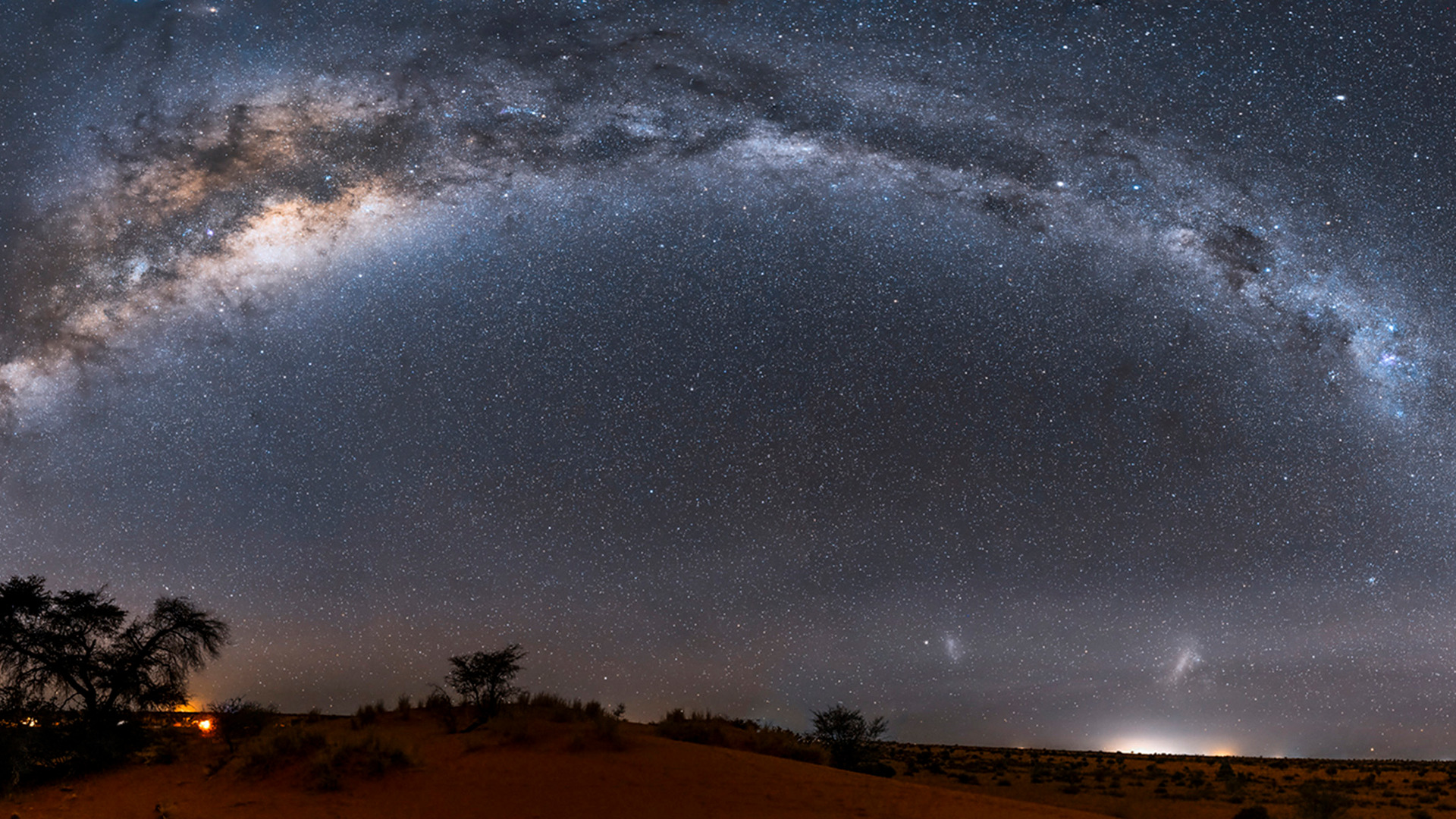
In a landscape as pristine as Hegra, the ultimate amenity is not a gold-plated lobby. It is the ability to view the breathtaking Milky Way from your private balcony. Without the backdrop of light pollution, the human eye quickly adapts to the darkness. Leanne reminded us that because of this heightened visual sensitivity, the required level of artificial illumination for walkways and safety drops quite dramatically.
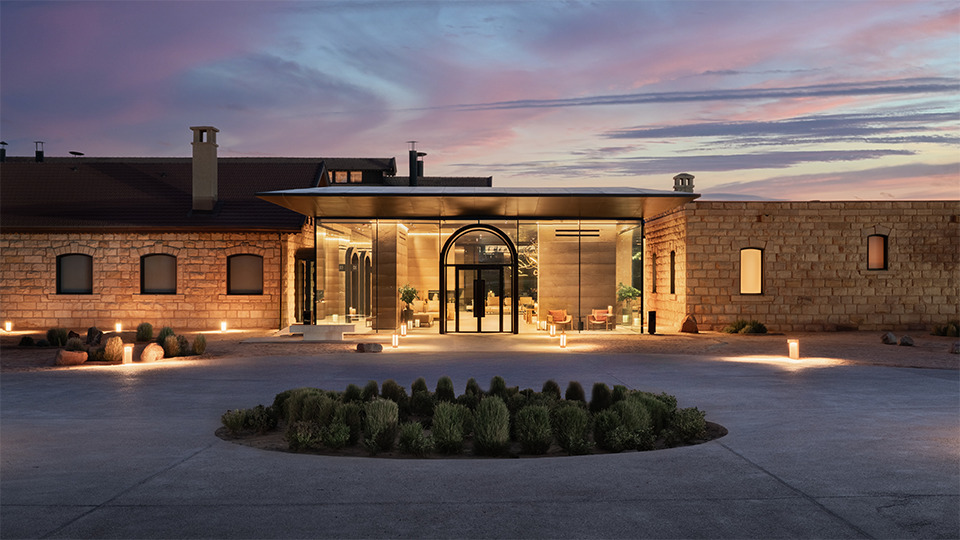
By replacing permanent, high-intensity streetlights with subtle, ground-level wayfinding illumination – and even providing guests with beautifully crafted portable lanterns – these remote resorts demonstrate that the most sophisticated lighting design scheme can be the one you barely notice.
Designing For a Starry Future
Six months after the discussion at Light Middle East, it is clearer than ever that we need to design for darkness. The dark sky movement is not just a romantic notion for astronomers; it is an environmental, social and public health necessity.
Our panel’s conclusion was definitive: light pollution is the only form of environmental degradation that can be largely reversed with the flip of a switch. We do not need to wait decades for speculative new technology, as we already possess the knowledge and the tools. What we need are updated standards, better public awareness and a willingness to rethink long-standing design assumptions.
Yet policy and technical standards can only take us so far. The true catalyst for change is awareness through experience. The most effective way to understand what we are losing is to immerse ourselves in what we are striving to preserve. We must take the opportunity to step away from the artificial glare of our urban centres and seek out the true night.
When you stand beneath an unpolluted sky and look up at the ancient, cascading canvas of stars, something profound happens. The cynicism of adulthood slips away, and you feel like a child again, struck by a sense of scale, stillness and absolute amazement.
That sense of awe is what we are missing in our over-illuminated lives. The night is half of our existence and a fundamental part of the human experience; it is time we started designing to protect it.